DG Set Monsoon Preparation Checklist for Gujarat Industrial Plants
A workshop technician's checklist for preparing diesel generators before the June–July monsoon — fuel, cooling, electrical, earthing, and shelter checks for South Gujarat plants.
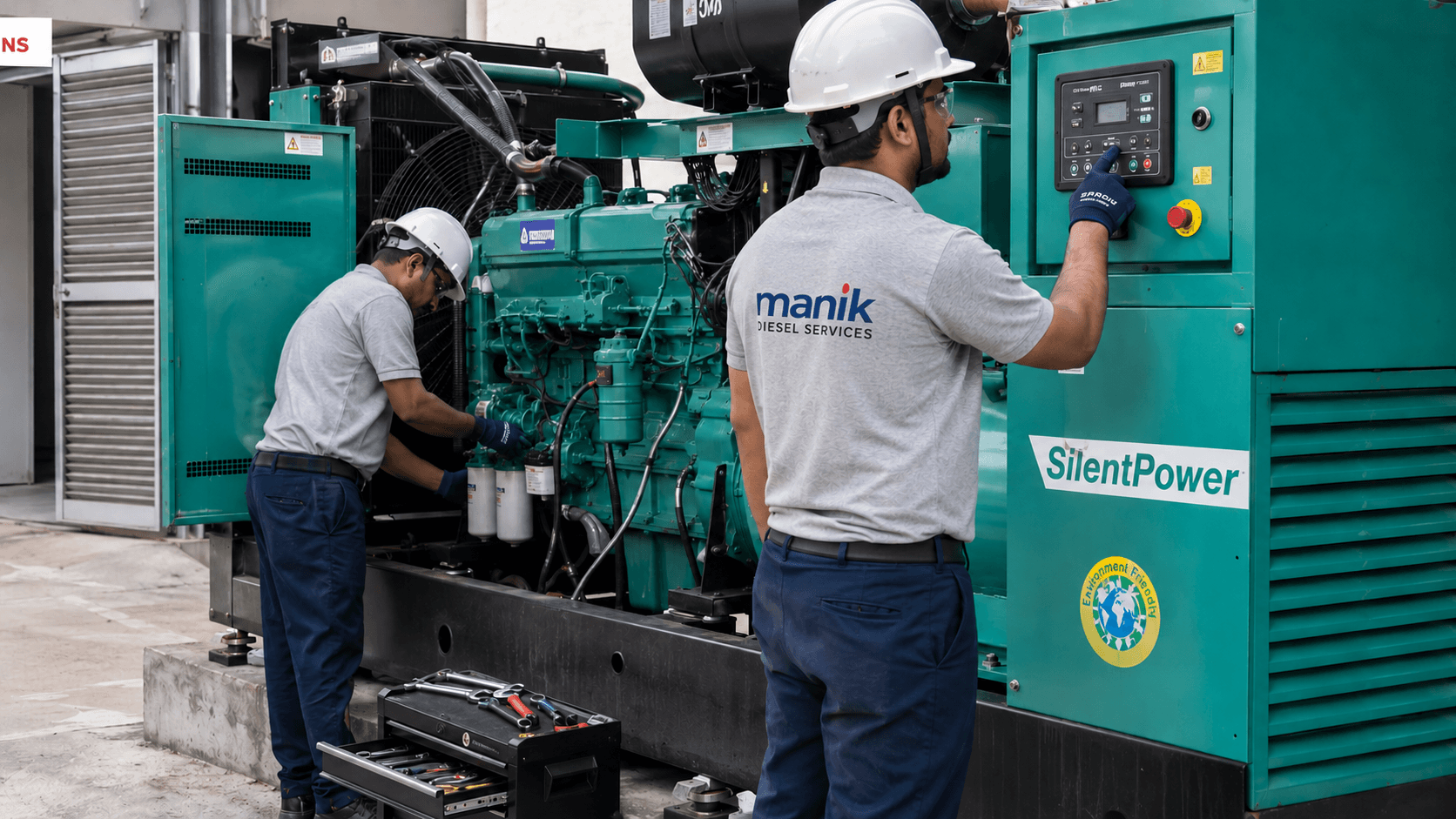
Why monsoon is the worst time for a DG set to fail
Monsoon season in South Gujarat typically arrives in the first week of June and brings sustained grid instability, flooding, and the highest DG set runtime of the year. Plants that rely on the generator for occasional backup suddenly need it running for hours, sometimes days, during extended outages caused by flooding of substations, distribution line faults, and high-demand load shedding.
This is precisely when deferred maintenance shows up as a failure. A battery that barely started the set in March will not start it at 2 AM during a monsoon-triggered outage. Coolant that was never tested will boil in a generator room where ventilation has been compromised by rain. Earthing that was adequate in dry conditions will fail when soil resistivity changes with moisture.
This checklist covers the inspection and maintenance work we recommend completing before June. It follows the order a technician would use during a pre-monsoon service visit — fuel system first, then cooling, electrical, structural, and safety. Each item includes what to check and what action to take if the check fails.
Fuel system checks
Drain the fuel tank for water and sediment. Even a tank that appears clean will have accumulated condensation at the base over the dry months. Open the drain plug and check for a water layer at the bottom — it appears as a cloudy, heavier layer beneath the diesel. If water is present, drain fully, clean the tank, and refill with fresh fuel. Microbial contamination in the tank appears as dark slime or sludge at the base — this needs a full tank clean and biocide treatment.
Replace the primary and secondary fuel filters. Pre-monsoon is a natural service interval. Do not carry over filters from the previous season — a filter that is borderline in May will block under the sustained runtime loads of a June outage.
Check the fuel day tank level and fill it to at least 75% capacity before monsoon arrives. If the main bulk storage is outdoors, inspect the tank vent for water ingress. Vent caps must face downward and be clear of any obstruction that would allow rain to enter.
Inspect all fuel lines, unions, and flexible connections for cracks, chafing, and loose clamps. Diesel flexible hose degrades with UV exposure and heat cycling. Any line showing surface cracking should be replaced before monsoon, not after.
Cooling system checks
Clean the radiator core with compressed air before monsoon. Textile and chemical plant environments accumulate fibre, dust, and oil mist on the radiator fins through the dry months. A partially blocked radiator that manages summer ambient temperatures may overheat when the generator room door is closed during heavy rain — a common site situation that eliminates ventilation airflow.
Test the coolant with a refractometer or test strips. Check antifreeze concentration (relevant for post-winter protection in highland or northern sites), and check the inhibitor concentration. Diesel engine coolant contains corrosion inhibitors that are consumed over time. Old coolant with depleted inhibitors attacks aluminium heads, water pump impellers, and heat exchanger surfaces. Replace coolant if inhibitor levels are below the OEM specification.
Inspect all coolant hoses for softness, swelling, surface cracking, and clamp integrity. The hose between the engine and the upper radiator tank is the highest-stress point — check it first. Hoses that feel soft when squeezed or show surface cracking should be replaced before the extended-run season.
Confirm the thermostat is operating correctly. A stuck-open thermostat prevents the engine reaching operating temperature and increases white smoke, cylinder wear, and fuel consumption on startup. A stuck-closed thermostat causes overheating that can destroy a head gasket in one extended run.
Battery and starting system checks
Load test the battery, not just measure voltage. A DG set battery that reads 12.6 V at rest may still fail to deliver cranking current if the plates have sulfated. A load tester applies a controlled discharge current and measures how far voltage drops — a battery that drops below 9.6 V under load on a 12 V system is not reliable for starting.
If the battery is more than three years old, replace it as a precaution before monsoon rather than waiting for it to fail during a critical outage. The cost of a new DG set battery is small against the cost of a failed start during extended grid outage.
Clean and tighten both battery terminals. Corroded terminals add resistance to the starting circuit and cause slow-crank symptoms. After cleaning, apply terminal grease to prevent re-corrosion during the humid monsoon period.
Check the battery charging circuit. The generator's alternator should be charging the starting battery at the correct voltage when the set is running. Measure terminal voltage at the battery while the set is running — it should read 13.8 to 14.4 V for a 12 V system. Below this means the charger or alternator rectifier needs attention.
Electrical and control panel checks
Inspect the AMF panel for corrosion, loose terminal screws, and blown fuses. Humidity during monsoon accelerates corrosion on control boards that are inadequately sealed. Check the panel enclosure IP rating — an outdoor panel should be IP54 minimum. Indoor panels in DG rooms with open ventilation are exposed to high humidity and should be checked for moisture damage before June.
Check all control wiring at the engine harness connections. Vibration over months of operation loosens plugs and connectors. A loose connector at the oil pressure sender or speed pickup can cause a false protection shutdown during the critical moment of a monsoon outage.
Test the automatic start sequence. With mains available, switch the panel to AUTO and simulate a mains failure by turning off the main incomer. Confirm the set starts within the programmed delay, voltage and frequency settle to specification, the bus transfer closes, and load is accepted. This test takes five minutes and is the only way to confirm the system will work when needed.
Check earthing continuity at the generator frame, neutral, and any local earth electrodes. Monsoon increases the risk of fault current events, and a high-resistance earth connection is a safety and equipment risk. Use a clamp meter on the earth cable to confirm continuity, or measure resistance with an earth tester if you have one.
Physical and shelter checks
Inspect the DG room roof, walls, and floor for water ingress routes. Even a small leak directly above the alternator can cause insulation failure or a control board fault. Seal roof penetrations, window frames, and wall cable entries before monsoon. If the DG room floods from floor drainage, the day tank, starting battery, and cable terminations must be raised above the expected flood level.
Check the ventilation path. Generator rooms need fresh air intake and hot air exhaust. Monsoon rain frequently drives water through ventilation louvres that are positioned incorrectly or lack rain protection. A monsoon-flooded ventilation intake will stall cooling airflow and cause the set to overheat. Fit rain hoods or downward-facing louvres if the current installation is exposed.
For outdoor canopied sets, check that all canopy door seals are intact, the exhaust outlet is positioned to avoid rain entry when the set is not running, and any roof-mounted cable entries are sealed. Confirm the canopy drainage is clear — a blocked drain in a silent canopy fills the floor tray and submerges the engine base.
Check the exhaust stack rain cap. The flap valve on the exhaust outlet prevents rain from entering the exhaust system when the set is not running. A failed or missing rain cap allows water to travel down the exhaust into the cylinders — which can cause hydrostatic lock on the next start attempt.
Load test under full load before monsoon arrives
Visual and physical checks confirm the system is ready; a load test confirms it actually works. Before the monsoon season begins, run the generator under full rated load for at least two hours. This reveals cooling system inadequacies, governor hunting, oil leaks under thermal expansion, and AVR instability that static checks will not find.
If a load bank is available, use it. If not, plan the test for a period when plant load is near generator capacity and run the set under real production load. Record voltage, frequency, oil pressure, coolant temperature, and exhaust smoke at the start of the test and at thirty-minute intervals. Values that drift outside acceptable bands during the test identify problems before they become failures.
Document the test result. A generator that passed a full-load test in May is a generator that plant management can rely on in June. A generator that was not tested is an unknown.
What to do if your set fails the pre-monsoon check
Common findings from pre-monsoon inspections that need workshop attention before June include: a battery that fails the load test, coolant that is out of specification and needs flushing, a fuel filter more than 500 hours overdue, a cooling hose that is soft or cracking, an AMF panel that does not execute the auto-start sequence correctly, and earthing that measures high resistance.
Most of these are day-of-service fixes, not multi-day jobs. The fuel filter and coolant replacement can be done in a two-hour visit. A battery replacement is one hour. An AMF panel control fault diagnosis typically takes a half-day.
The risk is in leaving them for after the monsoon, when the faults will materialise during the highest-demand period of the year. At Manik Diesel Services, we run pre-monsoon visits specifically for this inspection scope across the Surat and Sachin GIDC industrial belt. We are available at +91 99980 20245 or via WhatsApp at wa.me/919998020245 to schedule a pre-monsoon service visit before June.
Frequently asked questions
How far in advance should I do the pre-monsoon DG set check? At least four to six weeks before the expected onset — so by mid-April to mid-May for South Gujarat's typical June monsoon arrival. This allows time to order parts, complete repairs, and run a follow-up load test before June.
Does monsoon humidity damage diesel generators? High sustained humidity accelerates insulation degradation in alternator windings and causes corrosion in control panels, terminal strips, and earthing connections. Generators that are adequately housed, properly sealed, and run regularly are less susceptible. Sets that sit unused in damp conditions for weeks are the most at risk.
Should I cover the air intake during heavy monsoon rain? No. The engine requires continuous airflow for combustion and cooling during operation. Never restrict the intake while the set is running. If rain is entering through the intake louvre, fit a rain hood or redirect the intake to a protected location — do not cover it.
Is it safe to run a diesel generator during monsoon thunderstorms? Yes, if the installation is correctly earthed. Confirm earthing is connected and tested before monsoon. A properly earthed set is not at unusual risk from lightning. The risk is from flooding — if water is entering the DG room, shut the set down and investigate before restarting.
What maintenance is needed after monsoon ends? Post-monsoon: check earthing resistance again after soil has returned to normal moisture levels, inspect for corrosion on terminal blocks and panel boards, check fuel tank for any water contamination that entered during monsoon, and run a full load test. Re-confirm AMF auto-start function before reducing grid dependency in the drier months.
Book your pre-monsoon service
We are available for pre-monsoon DG set service across Sachin GIDC, Pandesara, Hazira, Udhna, Bardoli, Navsari, and surrounding industrial areas. A standard pre-monsoon inspection covers all items on this checklist plus a load test with observation. Contact us at +91 99980 20245 or WhatsApp at wa.me/919998020245 to book a visit.
Availability fills up in May — call before then if you want a confirmed slot before the monsoon arrives.